Best Geomembrane Thickness for Water Tanks (0.5mm–2mm)
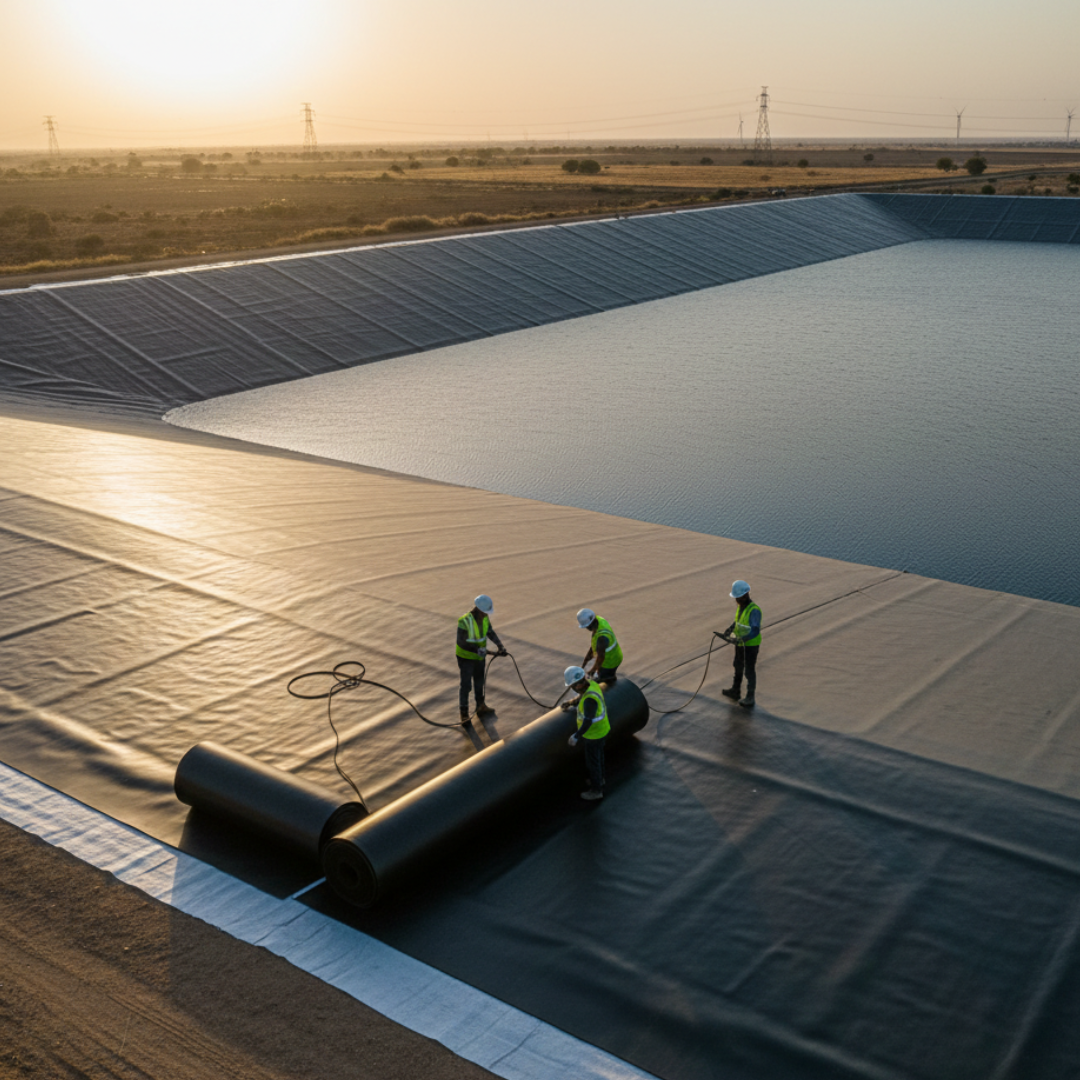
Selecting the correct geomembrane thickness is the most crucial decision in designing a water tanks. A geomembrane acts as an impermeable barrier, and its thickness, typically ranging from 0.5mm to 2mm for water storage applications, directly impacts the liner’s performance, durability, and cost-effectiveness. Choosing too thin a liner risks premature failure from punctures or tear resistance issues, while selecting an unnecessarily thick membrane inflates project costs without a proportional increase in lifespan.
This guide will break down the key factors and common industry recommendations to help you determine the best geomembrane thickness for your specific water containment system or reservoir project.
Understanding the Geomembrane Thickness Range

The industry standard for geomembrane liners in water storage applications often falls within the $0.5 \text{ mm}$ to $2.0 \text{ mm}$ range. The material type, such as High-Density Polyethylene (HDPE geomembrane), Linear Low-Density Polyethylene (LLDPE geomembrane), or PVC, also plays a significant role in overall performance at a given thickness.
0.5mm – 0.75mm: Often used for shallow ponds, smaller aquaculture ponds (like shrimp or fish farms), or temporary water storage solutions where hydrostatic pressure and puncture risk are low. Thinner materials generally offer greater flexibility and are easier to install over highly irregular terrain.
1.0mm – 1.5mm: This is the most common geomembrane thickness for medium to large-scale projects, including irrigation reservoirs, potable water tanks, and moderate-depth wastewater lagoons. This range offers a better balance of puncture resistance, tensile strength, and cost.
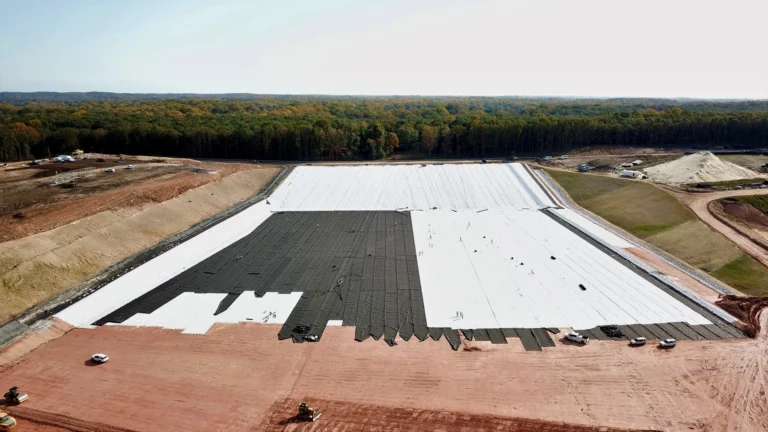
2.0mm and Above: Reserved for very large, deep reservoirs (high hydrostatic pressure), projects on rough subgrade (rocky soil), or applications requiring maximum long-term durability and superior chemical resistance, such as industrial process water or mining heap leach pads.
Key Factors Influencing Thickness Selection
Determining the ideal geomembrane liner thickness requires a thorough assessment of the project’s specific environmental and operational conditions.

1. Water Depth and Hydrostatic Pressure
The water tank’s depth is a primary determinant of required thickness. Deeper water exerts greater hydrostatic pressure on the liner, requiring a material with higher tensile and burst strength to prevent long-term stress failure.
Shallow Tanks (up to 3 meters): $0.5 \text{ mm}$ to $1.0 \text{ mm}$ is usually sufficient.
Deep Reservoirs (over 5 meters): $1.5 \text{ mm}$ to $2.0 \text{ mm}$ (or more) is recommended to safely handle the increased pressure.
2. Subgrade Quality and Puncture Resistance
The quality of the foundation—the subgrade—is critical. A rough subgrade containing sharp objects, large stones, or construction debris significantly increases the risk of liner puncture during or after installation.
Smooth, Fine-Grained Soil: $0.75 \text{ mm}$ to $1.0 \text{ mm}$ may be acceptable, especially with a protective layer of geotextile underlayment.
Rocky or Coarse Soil: A minimum of $1.5 \text{ mm}$ is often necessary, in addition to a thick geotextile for enhanced puncture resistance. The thicker geomembrane provides a larger factor of safety against point loads.
3. Liner Material Type
Different geomembrane materials offer varied performance characteristics at the same thickness:
HDPE (High-Density Polyethylene): Offers excellent chemical and UV resistance, high tensile strength, but lower flexibility. A thicker HDPE liner ($1.5 \text{ mm}$ to $2.0 \text{ mm}$) is best for permanent, large-scale projects.
LLDPE (Linear Low-Density Polyethylene): Higher flexibility and elongation than HDPE, making it easier to install on irregular surfaces. $1.0 \text{ mm}$ to $1.5 \text{ mm}$ LLDPE often provides comparable long-term durability for water storage where flexibility is key.
4. Project Life Expectancy and Exposure
The intended lifespan of the water containment system and the level of exposure to environmental factors like UV radiation and extreme temperatures affect the choice.
Temporary Projects (3–5 years): Thinner liners ($0.5 \text{ mm}$ to $0.75 \text{ mm}$) may be suitable.
Permanent Projects (20+ years): Thicker liners ($1.5 \text{ mm}$ to $2.0 \text{ mm}$), particularly UV-stabilized HDPE, are required for enhanced service life.
Thickness Recommendations by Application
The following table summarizes general thickness guidelines for various water storage applications:

| Application Type | Primary Focus | Recommended Thickness Range |
|---|---|---|
| Agricultural Ponds / Aquaculture | Flexibility, Cost, Low Depth | 0.5 mm – 1.0 mm |
| Potable Water Storage Tanks | Non-Toxicity, Durability | 1.0 mm – 1.5 mm |
| Irrigation Reservoirs | Puncture Resistance, UV Stability | 1.0 mm – 1.5 mm |
| Wastewater Treatment / Lagoons | Chemical Resistance, High Pressure | 1.5 mm – 2.0 mm |
| Mining / Industrial Ponds | Maximum Strength, Abrasion Resistance | 2.0 mm and above |
The Role of Geotextile Underlayment
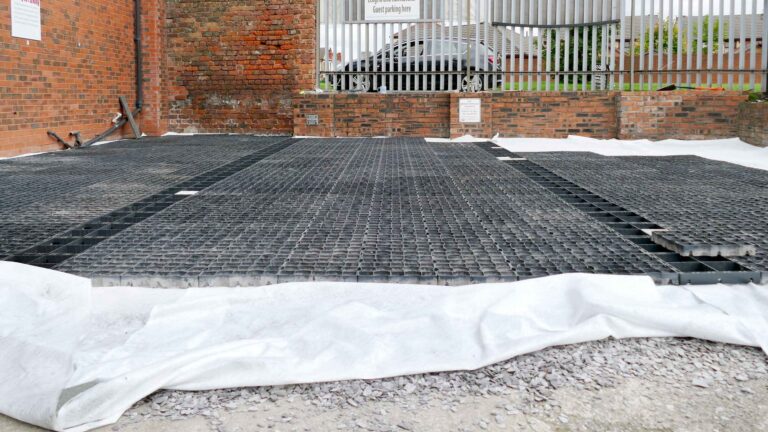
It’s important to note that thickness is not the only safety factor. For virtually all applications, especially those where the subgrade is not perfectly smooth, a geotextile underlayment should be used. The geotextile acts as a protective layer, shielding the geomembrane barrier from sharp objects and distributing localized stress points. A heavy-duty geotextile can, in some cases, allow for the use of a slightly thinner, more flexible geomembrane liner while maintaining the required puncture resistance.
Conclusion: Making the Final Selection
The selection of the best geomembrane thickness for a water containment system is a complex engineering decision. While $0.5 \text{ mm}$ to $2.0 \text{ mm}$ covers the most common range, the optimal choice hinges on a balanced assessment of hydrostatic pressure, subgrade conditions, material properties, and project life. Consulting with an experienced geosynthetics engineer is always the wisest step to ensure your water storage project achieves maximum long-term durability and leak prevention.
FAQ’S
How do I choose the right geomembrane thickness for my application?
Geomembrane thickness depends on the type of project, pressure levels, soil conditions, water depth, and expected lifespan.
For example, agricultural ponds generally use 0.5–1.0 mm, while industrial or mining ponds need 2.0 mm or above for maximum strength.
Why is thicker geomembrane required for wastewater and industrial applications?
Wastewater, lagoons, and industrial ponds involve chemicals, high pressure, and potential abrasion, so they require 1.5–2.0 mm geomembrane for better resistance and long-term reliability.
What thickness is safe for potable water storage tanks?
Potable water storage tanks need food-grade, non-toxic liners, typically 1.0–1.5 mm thickness, to balance durability with flexibility while meeting safety standards.
Can a single geomembrane thickness be used for all projects?
No. Different applications require different performance properties.
For example:
0.5–1.0 mm works for small agricultural ponds.
1.0–1.5 mm suits irrigation and water tanks.
2.0 mm+ is needed for mining, industrial containment, and high-stress environments.
Choosing the wrong thickness may lead to leaks, premature failures, or costly repairs.