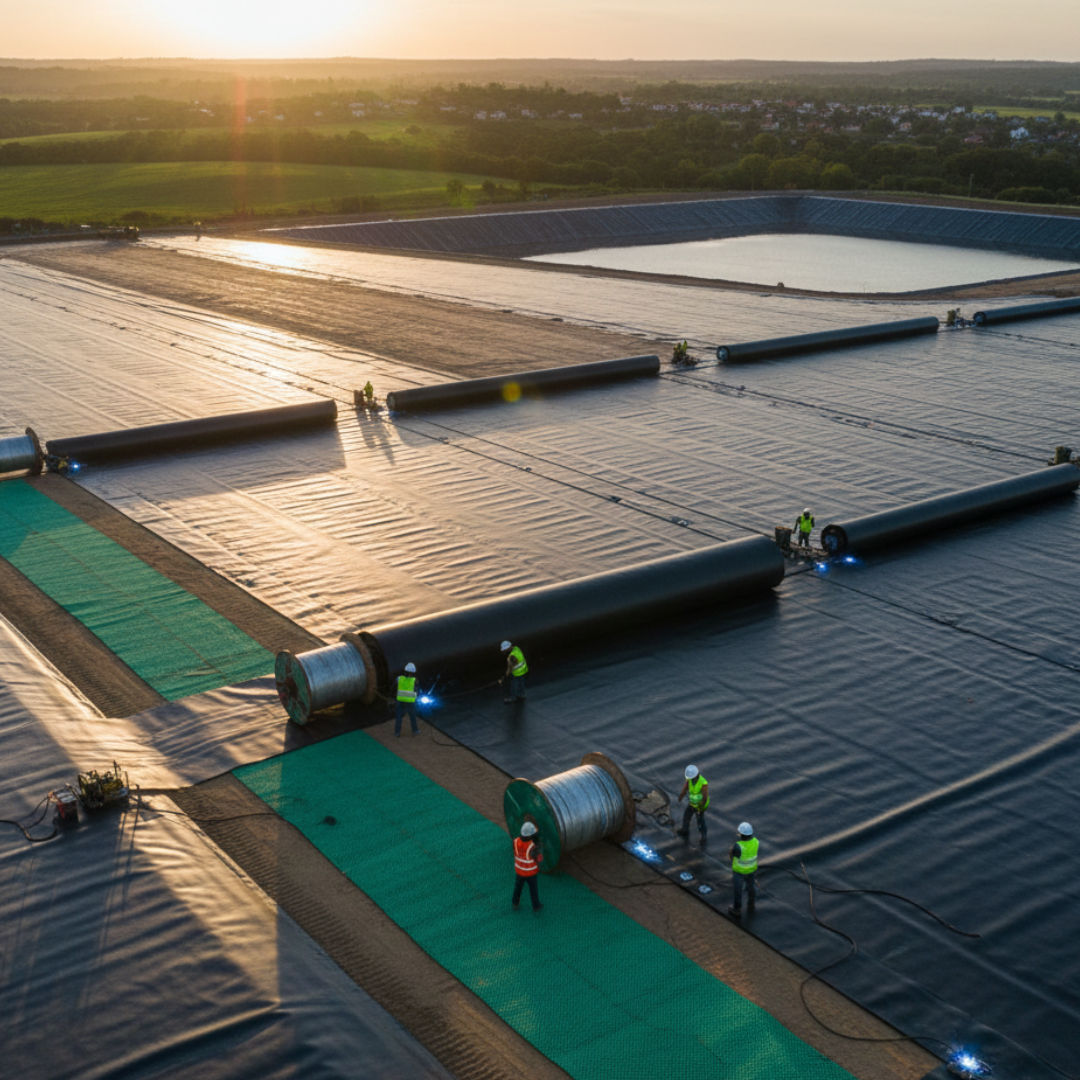
Geomembrane Liner for Construction Projects
Introduction
In the dynamic world of construction, innovation constantly drives efficiency, durability, and environmental responsibility. Among the most vital yet often unseen components are geomembrane liners. These advanced synthetic barriers are fundamental in ensuring the longevity, safety, and regulatory compliance of a vast array of civil engineering and construction projects. From preventing contamination to managing water flow, geomembranes are an indispensable tool for robust infrastructure.
What is a Geomembrane Liner in Construction?

A geomembrane liner is a virtually impermeable synthetic membrane used as a barrier in various civil engineering applications. Typically made from polymer sheets like HDPE geomembrane, LLDPE, or PVC, their primary role is to act as a complete fluid barrier or vapor barrier, isolating substances and preventing their migration. In construction, this means protecting foundations, containing waste, managing water, and ensuring structural integrity.
Key Applications of Geomembrane Liners in Construction Projects
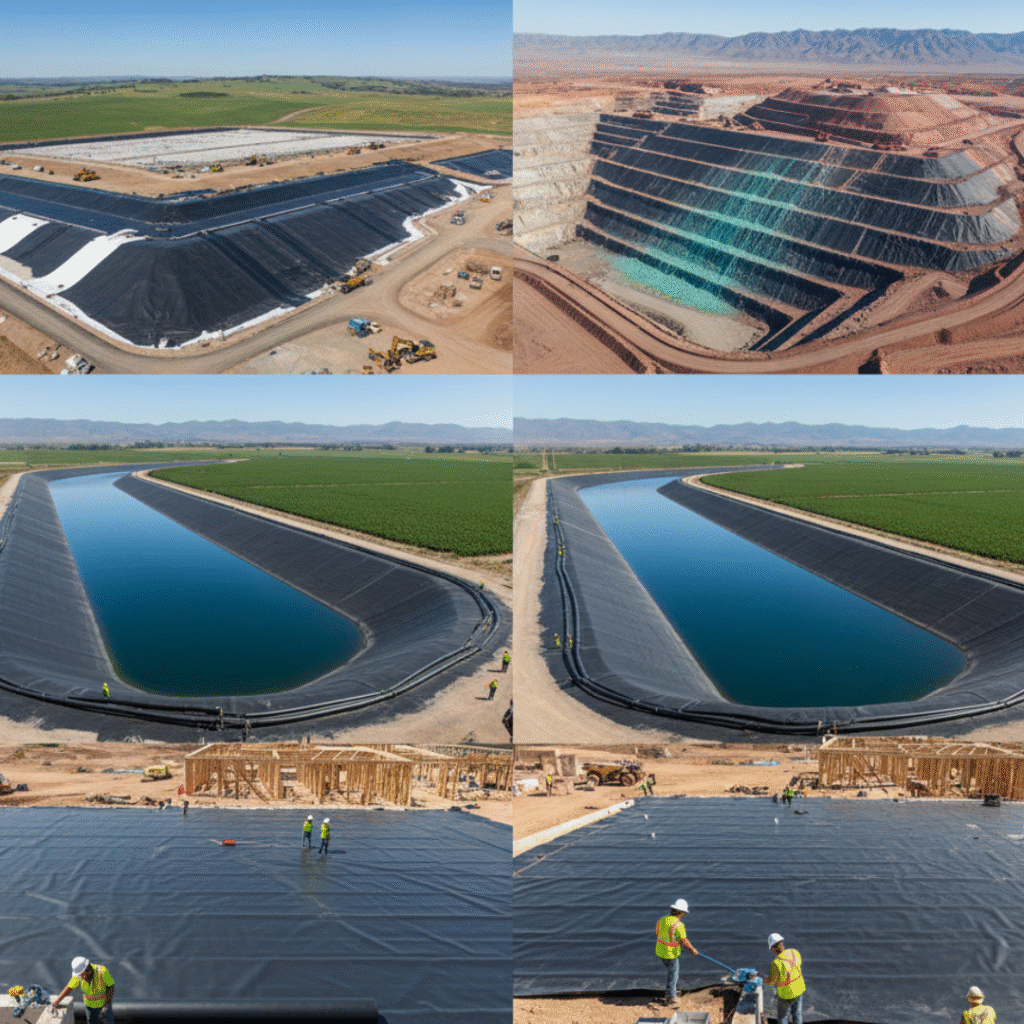
Geomembranes are incredibly versatile, finding critical applications across diverse construction sectors:
1. Environmental Protection: Landfills and Waste Containment
Perhaps the most recognized application is in landfill construction. Here, multi-layered systems, including HDPE geomembrane liners, are crucial. They form an impervious barrier to prevent the leakage of leachate (contaminated liquid) into groundwater and soil. This robust containment system is essential for environmental protection and regulatory compliance, minimizing pollution risk.
2. Water Management: Reservoirs, Ponds, and Canals
As discussed previously, geomembranes are paramount in water containment for reservoirs, irrigation canals, and decorative ponds. They drastically reduce water loss through seepage, ensuring efficient water resource management. This seepage control is vital for agricultural, municipal, and industrial water storage facilities, often utilizing HDPE liner installation due to its durability.
3. Foundation and Basement Protection
In building construction, geomembranes serve as critical moisture barriers. When installed beneath concrete slabs or around basement walls, they function as a vapor barrier, preventing moisture ingress that could lead to mold, structural damage, or compromised indoor air quality. This protects the building’s structural integrity and interior environment.
4. Mining Applications: Heap Leach Pads and Tailings Dams
The mining industry heavily relies on geomembranes for mining applications. They are used to line heap leach pads, preventing valuable chemical solutions from escaping, and to construct tailings dam liners, containing mining waste and preventing the contamination of surrounding ecosystems. The chemical resistance and durability of materials like HDPE are particularly important here.
5. Road and Tunnel Construction
Geomembranes can be incorporated into road bases and tunnel structures to manage groundwater and prevent water from saturating subgrades, which can lead to pavement failure. They act as a separation layer and a drainage layer component, enhancing the longevity of infrastructure.
The Science Behind the Impervious Shield

The effectiveness of a geomembrane as a barrier hinges on several key characteristics:
Low Permeability: The synthetic polymers used have an extremely low coefficient of hydraulic conductivity, making it virtually impossible for liquids to pass through.
Seam Integrity: Just like in water reservoirs, the quality of geomembrane welding (fusion or extrusion) is paramount. Properly welded seams ensure the entire liner system acts as one continuous, impermeable barrier.
Durability: Geomembranes are engineered to resist chemical attack, UV degradation, punctures, and temperature fluctuations, ensuring long-term performance even in harsh environments.
Flexibility & Strength: Depending on the polymer, they offer a balance of flexibility to conform to varied terrains and sufficient strength to withstand installation stresses and operational loads.
Installation and Quality Assurance
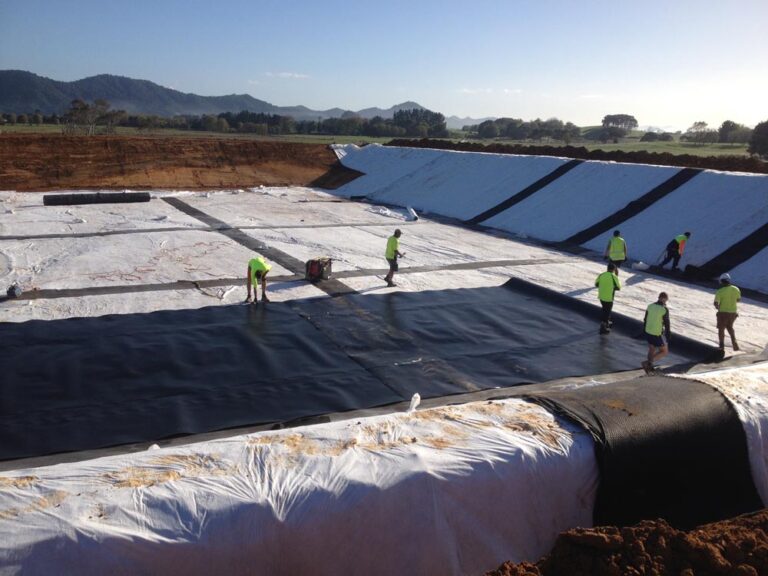
Effective geomembrane installation is crucial. It involves:
Subgrade Preparation: Meticulously clearing and compacting the underlying soil.
Geotextile Protection Layer: Often placed above and below the geomembrane to protect it from punctures and abrasion.
Anchor Trenches: Securing the edges of the liner to prevent uplift and ensure a continuous seal.
Quality Control: Rigorous testing of every seam (e.g., air pressure, vacuum box, spark testing) to guarantee the integrity of the containment system.
Long-Term Benefits and Sustainability
Investing in geomembrane liners offers significant long-term benefits for construction projects:
Environmental Protection: Minimizing pollution and preserving natural resources.
Enhanced Durability: Protecting civil structures from water damage and chemical exposure.
Cost-Effectiveness: Preventing costly repairs, remediation, and resource loss over the project lifespan.
Regulatory Compliance: Meeting strict environmental and safety standards.
Conclusion
Geomembrane liners are far more than just plastic sheets; they are sophisticated engineered barriers that are indispensable to modern construction projects. From safeguarding our environment in landfill construction to preserving our water resources and protecting vital infrastructure, their role as an impervious barrier cannot be overstated. By understanding and properly utilizing these essential materials, the construction industry continues to build more resilient, sustainable, and environmentally responsible structures for the future.
FAQ’S
What is a geomembrane liner used for in construction projects?
Geomembrane liners are used in construction to prevent water seepage, control moisture, and protect structures. They are commonly applied in foundations, basements, canals, tunnels, retaining walls, roads, and other civil engineering works.
Which type of geomembrane is best for construction use?
HDPE geomembranes are widely used in construction due to their high strength, durability, puncture resistance, and long lifespan. PVC and LDPE geomembranes are preferred where flexibility and ease of installation are required.
What thickness of geomembrane liner is recommended for construction?
The recommended thickness typically ranges from 0.75mm to 2.0mm, depending on soil conditions, load pressure, and exposure. Heavy-duty construction and high-stress areas usually require thicker geomembrane liners.
Is professional installation necessary for geomembrane liners in construction?
Yes. Professional installation, including proper subgrade preparation, welding, and seam testing, is essential to ensure leak-proof performance, structural protection, and long-term durability in construction projects.