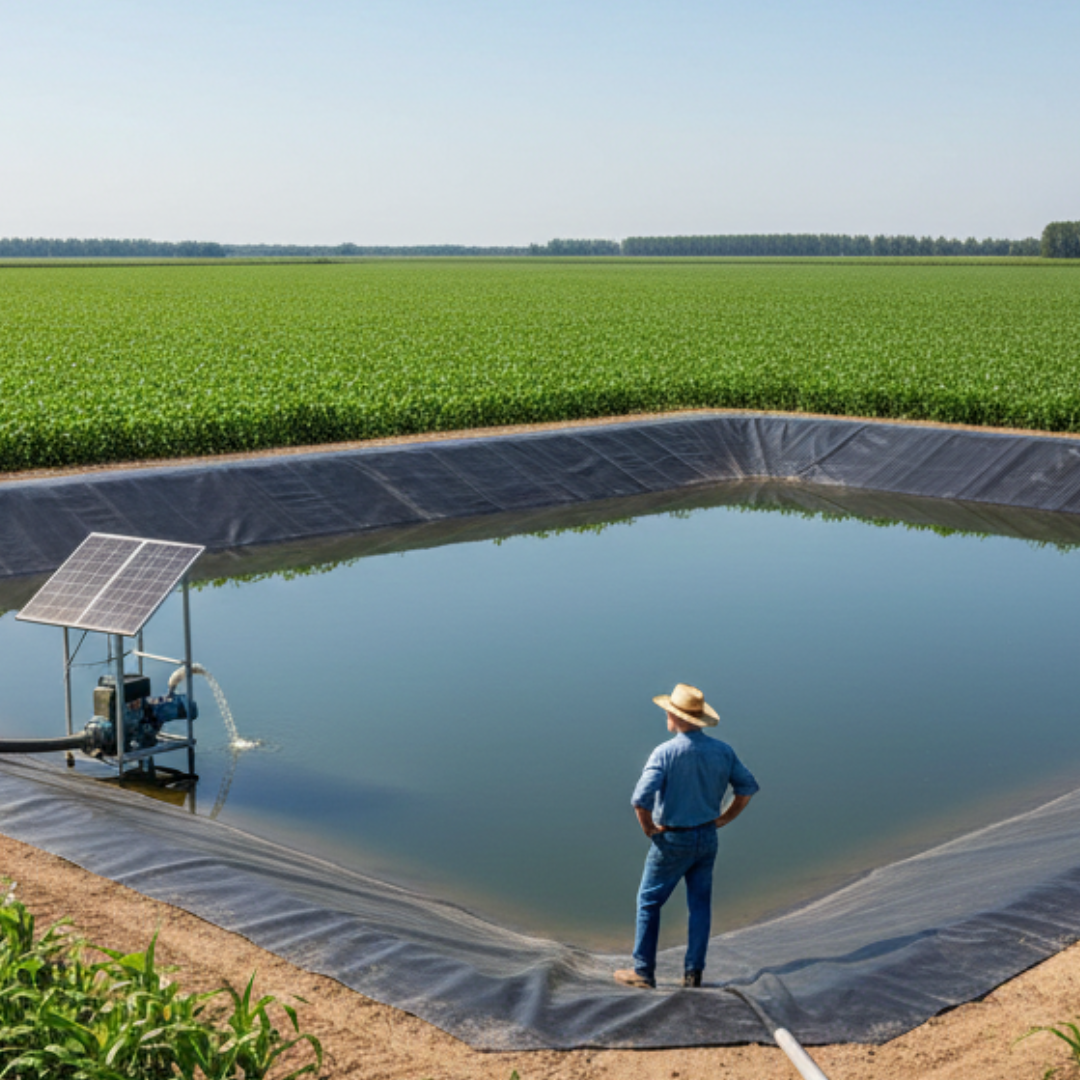
Low Cost Geomembrane Options for Farmers
Introduction
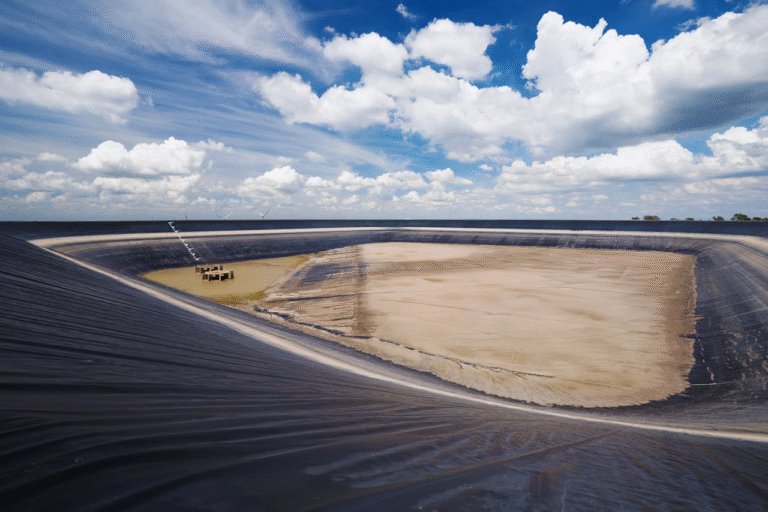
For farmers, water is the single most vital resource. Whether you’re managing irrigation ponds, building a new farm reservoir, or lining a crucial canal, water containment is essential for maintaining crop health and operational efficiency. However, traditional methods like compacted clay can be prone to seepage and are not always a cost-effective water storage solution.
This is where geomembranes—synthetic, impermeable liners—come in. While industrial-grade liners can be expensive, several low-cost geomembrane options are specifically designed to meet the budget and needs of agricultural applications, helping farmers secure their future through efficient water conservation.
The Big Three: Affordable Geomembrane Materials
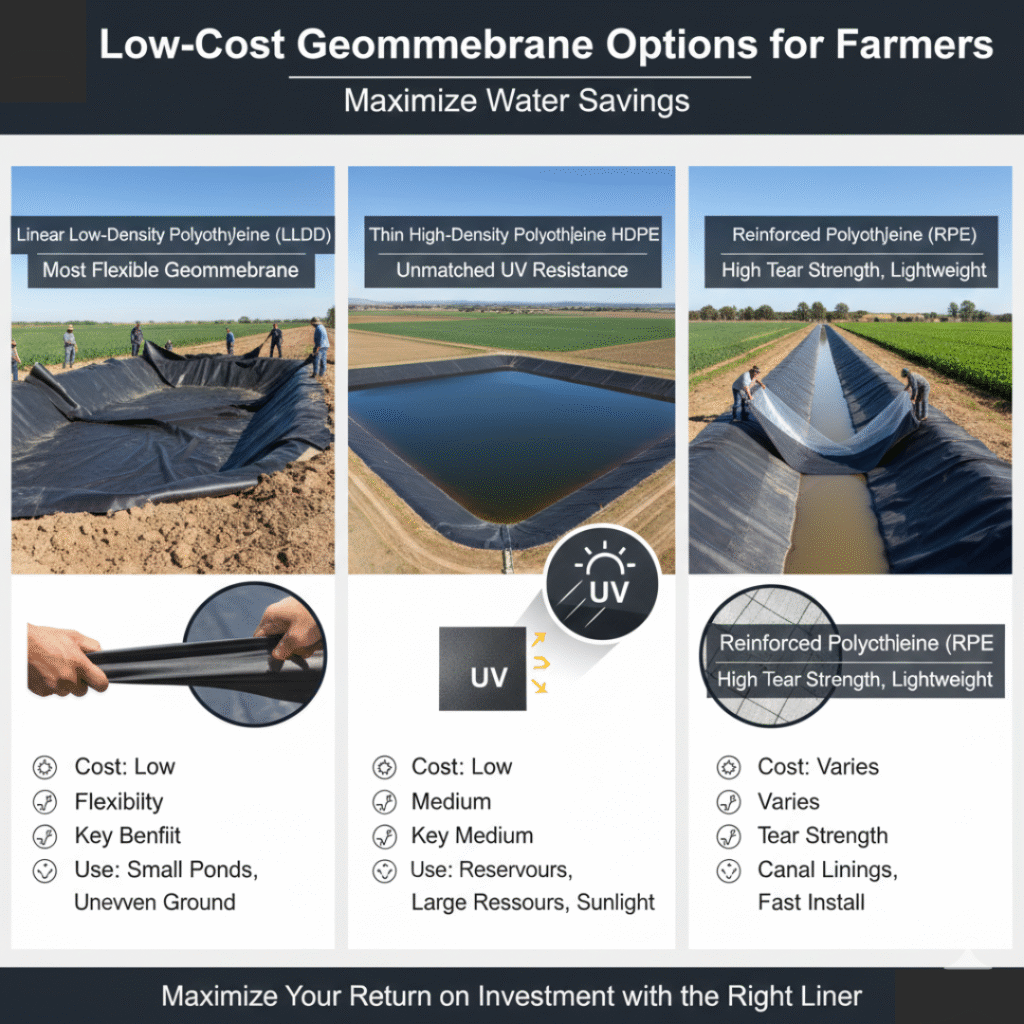
When searching for an economical pond liner for agriculture, three main materials stand out for balancing performance and affordability. The choice often comes down to the required lifespan, flexibility, and site conditions.
1. Linear Low-Density Polyethylene (LLDPE) Liner
LLDPE is arguably the most flexible geomembrane available. It’s an excellent choice for farm use due to its high elongation properties.
Cost Profile: Generally, LLDPE is one of the most budget-friendly options, especially in thinner gauges (around 0.75mm or 30 mil).
Key Benefits for Farmers: Its high flexibility allows it to conform easily to uneven pond construction surfaces, reducing the need for extensive subgrade preparation. It also has superior tear and puncture resistance compared to non-reinforced PVC or other very thin liners. This flexibility makes LLDPE geomembrane easier for farmhands to install without specialized equipment.
Best Used For: Small to medium-sized irrigation ponds, ornamental ponds, and areas prone to uneven settlement.
2. Thin High-Density Polyethylene (HDPE) Liner
While thick HDPE geomembrane (1.5mm or 2.0mm) is standard for landfills, thinner versions (0.5mm to 1.0mm or 20 to 40 mil) offer the core benefits of HDPE at a lower price point.
Cost Profile: Mid-range. Slightly more expensive than LLDPE on a square-meter basis for the same thickness, but offers a greater return on investment over the long term.
Key Benefits for Farmers: Unmatched chemical and UV resistance. If your water contains agricultural chemicals or fertilizers, or if the farm reservoir is in intense sunlight, the long-term UV resistance of HDPE is invaluable for extending its service life.
Best Used For: Permanent water containment structures, above-ground water tanks, and large irrigation ponds in sunny, exposed locations.
3. Reinforced Polyethylene (RPE) Liner
RPE is a composite material where a polyethylene film is reinforced with a scrim (grid or fabric). This reinforcement drastically improves tear strength.
Cost Profile: Varies widely, but often highly cost-effective water storage option due to its lightweight and high strength-to-weight ratio.
Key Benefits for Farmers: Extremely light and foldable, making it superb for large, prefabricated panels that minimize the need for on-site field welding. Its tensile strength is very high, providing excellent puncture resistance against sharp roots or rocks.
Best Used For: Large-scale canal linings, temporary water storage, and applications where fast, simple liner installation is crucial.
Critical Factors Affecting Geomembrane Cost
To ensure you get the best geomembrane price, consider how these factors affect the final investment:
1. Liner Thickness
This is the single biggest cost driver. For most agricultural use, you can opt for 0.5mm to 1.0mm thickness. Thinner geomembrane thickness saves money upfront, but remember that thicker material offers higher puncture resistance and a longer lifespan, potentially providing a better return on investment.
2. Subgrade Preparation
The amount of money you spend preparing the ground directly influences the best geomembrane price you can select. A rough, rocky subgrade necessitates a thicker, more durable material (like thicker HDPE or RPE) to prevent tears. A smooth, prepared subgrade allows you to use a thinner, low-cost geomembrane like LLDPE.
3. Geotextile Underlayment
To protect your investment, a geotextile underlayment (a soft, non-woven fabric laid beneath the liner) is highly recommended. While it adds an initial cost, it dramatically increases the liner’s puncture resistance and longevity, reducing the risk of costly leak repair. Think of it as farm reservoir insurance.
Installation and Long-Term Value
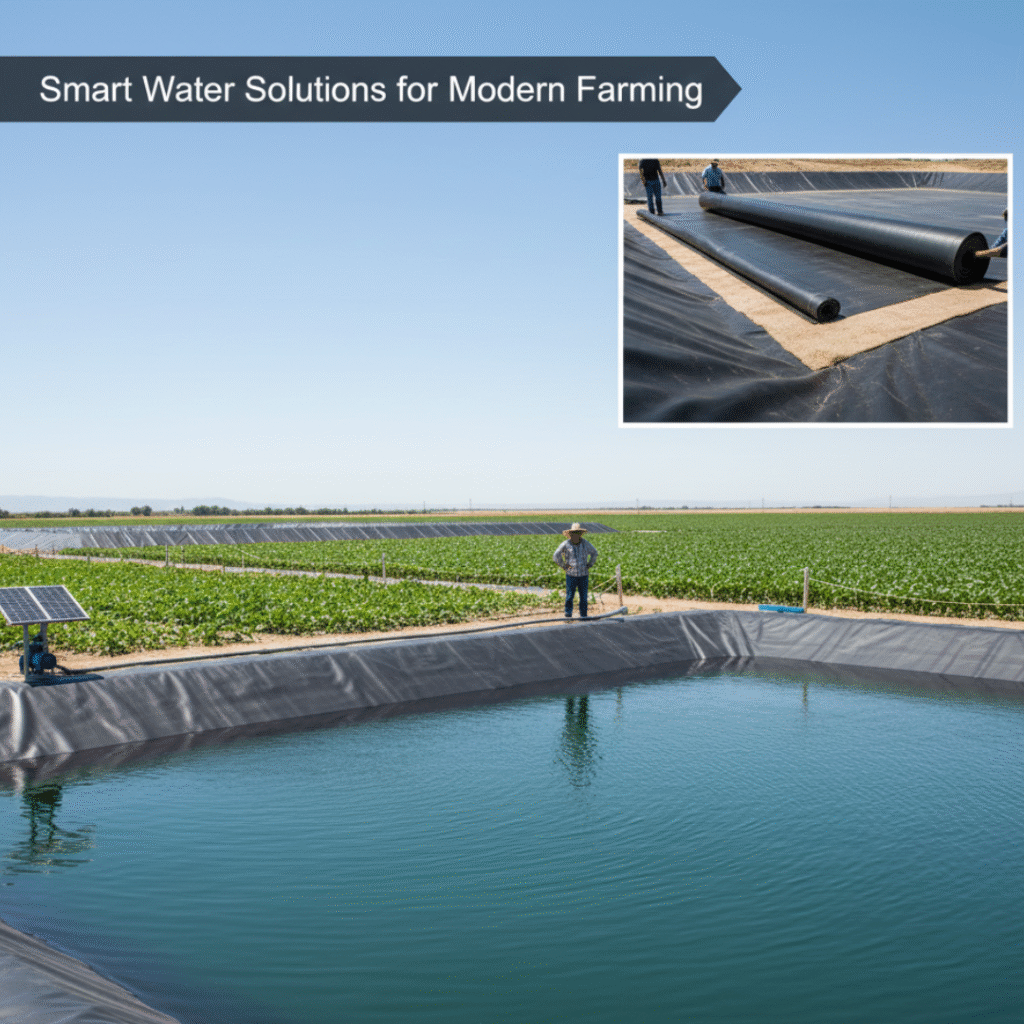
Choosing a low-cost geomembrane is not just about the material’s price; it’s about the total cost of ownership, which includes liner installation and maintenance costs.
Self-Installation vs. Professional: For small irrigation ponds using LLDPE or RPE, many farmers can handle the liner installation themselves, saving on labor costs. However, large farm reservoir projects using thick HDPE require specialized geomembrane welding equipment for effective leak repair and a guaranteed seal.
UV Resistance and Lifespan: While some cheaper materials may not have high UV resistance, their price is justified if the liner is quickly covered with soil or water. For exposed surfaces, prioritizing UV resistance (found in high-quality HDPE and LLDPE with carbon black additives) is key for a long-term water containment solution. The material might cost slightly more initially, but it slashes future maintenance costs.
Conclusion
The goal for farmers should be cost-effective water storage, not just the cheapest initial purchase. For most agricultural projects, LLDPE geomembrane offers the ideal combination of flexibility and low cost for medium-term use, while thin HDPE geomembrane offers superior UV resistance for long-term, exposed applications.
Before making a final decision, always consult with a geosynthetics supplier and consider the total lifecycle cost—the most affordable geomembrane is the one that lasts the longest with the least amount of leak repair.
FAQ’S
What is the most affordable geomembrane option for farmers?
For farmers, LDPE and PVC geomembranes are usually the most affordable options. They offer good flexibility and waterproofing at a lower cost, making them suitable for farm ponds, irrigation channels, and water storage pits.
Is a low-cost geomembrane durable enough for agricultural use?
Yes. When the correct thickness is selected and the liner is properly installed, low-cost geomembranes can last many years in agricultural environments. Proper subgrade preparation greatly improves durability.
What thickness of geomembrane is best for farmers on a budget?
For budget-friendly farming applications, 0.5mm to 1.0mm thickness is commonly used. This range provides a balance between cost, flexibility, and leak protection for small to medium water storage needs.
Can farmers install geomembrane liners themselves to reduce costs?
Yes, for small ponds and simple layouts, farmers can perform basic installation. However, professional welding and seam sealing are recommended for larger ponds to avoid leaks and costly repairs later.