
Geomembrane for Fish Farming Ponds
The success of a fish farming pond hinges significantly on its ability to effectively contain water and maintain optimal water quality. A well-chosen geomembrane liner is fundamental to achieving this, preventing seepage, protecting against contaminants, and simplifying pond management. This complete buyer guide will walk you through everything you need to know about selecting the best geo membrane for fish farming ponds, ensuring a healthy environment for your aquatic livestock and a profitable operation.
Why is a Geo Membrane Essential for Fish Farming Ponds?

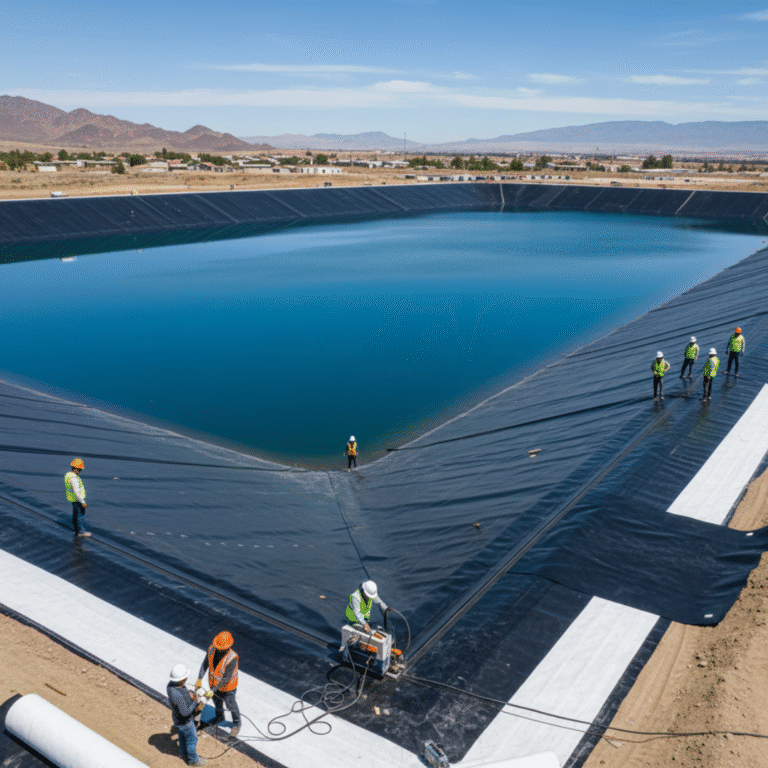
In traditional earthen ponds, significant water loss can occur through infiltration into the soil, especially in sandy or porous areas. This not only wastes water but also leads to increased pumping costs and inconsistent water levels. A pond liner for fish farming creates an impermeable barrier between the water and the underlying soil, offering numerous benefits:
Water Retention: Dramatically reduces seepage, conserving water resources.
Water Quality Control: Prevents the leaching of soil contaminants into the pond and stops nutrient loss from the pond into the surrounding environment. This helps maintain stable pH levels and minimizes unwanted algae blooms.
Disease Prevention: A smooth, impermeable surface makes cleaning and sanitization easier, reducing the risk of disease outbreaks.
Ease of Maintenance: Simplifies sludge removal and harvesting processes.
Site Flexibility: Allows for the construction of aquaculture ponds even in areas with unsuitable native soil, expanding potential farming locations.
Durability and Longevity: Protects the pond structure from erosion and provides a long-lasting solution for water containment.
Types of Geo Membranes Suitable for Aquaculture
Several types of geomembrane materials are available, each with distinct properties. For fish pond liners, the focus is often on non-toxicity, flexibility, and puncture resistance.
1. HDPE Geomembrane (High-Density Polyethylene)
Pros: Excellent strength, superior chemical and UV resistance, and a long service life. Very durable for large, permanent installations.
Cons: Less flexible than LLDPE, making it more challenging to install on irregular surfaces. Requires specialized welding equipment for seams.
Ideal For: Large-scale, permanent fish pond projects where longevity and chemical inertness are paramount.
2. LLDPE Geomembrane (Linear Low-Density Polyethylene)
Pros: Highly flexible, which simplifies installation over uneven terrains and reduces stress cracking. Good puncture resistance and cold-weather performance. Generally more forgiving to install than HDPE.
Cons: Slightly lower tensile strength and chemical resistance compared to HDPE, though still excellent for most aquaculture uses.
Ideal For: Smaller to medium-sized fish ponds, backyard koi ponds, or projects requiring ease of installation and excellent flexibility. This is a very popular fish safe pond liner.
3. PVC (Polyvinyl Chloride)
Pros: Very flexible and relatively inexpensive. Easy to install and patch without specialized welding equipment.
Cons: Lower UV resistance and not as durable long-term as HDPE or LLDPE. Can become brittle in extreme cold. Contains plasticizers that can potentially leach over time, a concern for sensitive aquatic species.
Ideal For: Temporary ponds or small, shaded ornamental ponds where ease of installation and low initial cost are primary concerns. Often not recommended for large-scale, long-term commercial fish farming due to longevity and potential chemical concerns.
4. RPE (Reinforced Polyethylene)
Pros: Combines the strength of a woven scrim with the flexibility of polyethylene. Lightweight, high tear resistance, and often available in large panel sizes.
Cons: Can be more expensive than standard LLDPE.
Ideal For: Large custom shapes or areas requiring superior tear resistance where weight is a factor.
Key Factors When Choosing a Geo Membrane for Fish Farming
Making the right choice involves evaluating your specific needs against the liner’s characteristics.

1. Material Non-Toxicity (Fish Safe)
This is paramount. The chosen aquaculture geomembrane must be non-toxic and inert, meaning it will not leach harmful chemicals into the water that could stress or kill your fish. HDPE and LLDPE are generally considered fish safe pond liner materials and are approved for potable water applications, making them excellent choices.
2. Geomembrane Thickness
As discussed in previous guides, geomembrane thickness (typically $0.75 \text{ mm}$ to $1.5 \text{ mm}$ for fish ponds) is crucial.
0.75mm – 1.0mm: Suitable for smaller, shallower ponds with a well-prepared, smooth subgrade.
1.0mm – 1.5mm: Recommended for most commercial fish farming ponds to provide ample puncture resistance against potential hazards like roots, stones, or even fish activity during harvesting. This range offers excellent long-term durability.
3. UV Resistance
If your pond is exposed to direct sunlight, high UV resistance is essential to prevent material degradation and extend the service life of the liner. HDPE and LLDPE typically incorporate UV stabilizers.
4. Puncture Resistance and Subgrade Protection
The subgrade (the soil beneath the liner) must be meticulously prepared, free of sharp objects. Even with good preparation, a durable pond liner for fish farming with high puncture resistance is vital. Consider using a geotextile underlayment to provide an additional layer of protection, especially on less-than-ideal subgrades.
5. Flexibility and Installation Ease
For ponds with complex shapes or steep slopes, a more flexible material like LLDPE will be easier to install, conforming better to the contours. Installation involves proper seaming (welding for HDPE/LLDPE, adhesive for PVC) to ensure a watertight seal.
6. Chemical Resistance
While most fish pond projects primarily deal with water, if you use any specific treatments, fertilizers, or anticipate any unique chemical interactions, ensure your liner material is resistant. HDPE has superior chemical resistance.
7. Cost-Effectiveness
Consider the long-term costs. While a thinner or cheaper liner might save money upfront, premature failure or constant repairs can make it far more expensive over the service life of the pond. Invest in a quality aquaculture geomembrane for peace of mind and sustainable operations.
Installation Tips for Your Fish Pond Liner
Proper installation is as important as the liner itself.
Site Preparation: Clear all debris, roots, and sharp objects. Grade the pond smoothly, removing any rocks or humps. Compact the subgrade.
Geotextile Layer: Lay down a non-woven geotextile underlayment if recommended, overlapping seams by at least $15 \text{ cm}$.
Liner Deployment: Carefully unfold and position the geomembrane barrier. Avoid walking directly on the liner with dirty boots.
Seaming: For HDPE and LLDPE, use trained and certified welding technicians. For PVC, follow manufacturer’s guidelines for adhesive seaming. Ensure all seams are strong and watertight.
Anchoring: Secure the edges of the liner in an anchor trench around the perimeter of the pond.
Inspection: Thoroughly inspect the installed liner for any punctures, tears, or faulty seams before filling.
Conclusion: Investing in Your Aquaculture Success
Choosing the right geo membrane for fish farming ponds is a critical investment in the success and sustainability of your aquaculture operation. By carefully considering material type, thickness, non-toxicity, and site-specific factors, you can select an aquaculture geomembrane that provides excellent water containment, maintains optimal water quality, and ensures the long-term health and productivity of your fish. Prioritize quality and proper installation to secure your investment.
FAQ’S
Why is geomembrane used for fish farming ponds?
Geomembrane is used because it provides a leak-proof, durable, and safe barrier that prevents water seepage, maintains water levels, and ensures a stable environment for fish. It also resists UV rays, chemicals, and algae growth.
Which geomembrane thickness is best for fish farming ponds?
For most aquaculture and biofloc ponds, 0.75mm to 1mm HDPE geomembrane is ideal.
Small ponds can use 0.5mm, while larger, deeper ponds or commercial fish farms may require 1.5mm for added strength and puncture resistance.
Is HDPE or LDPE better for fish farming ponds?
HDPE geomembrane is generally preferred because it offers higher durability, better UV resistance, and longer lifespan. LDPE is more flexible and easier to install but is better suited for small-scale or low-depth ponds.
Is geomembrane safe for fish and aquaculture?
Yes. Food-grade HDPE and LDPE geomembranes are non-toxic, eco-friendly, and safe for fish, shrimp, and other aquaculture species. They do not release harmful chemicals into the water and help maintain a controlled environment.