0.75mm vs 1mm vs 2mm Geomembrane – Which Thickness Is Best?
Introduction
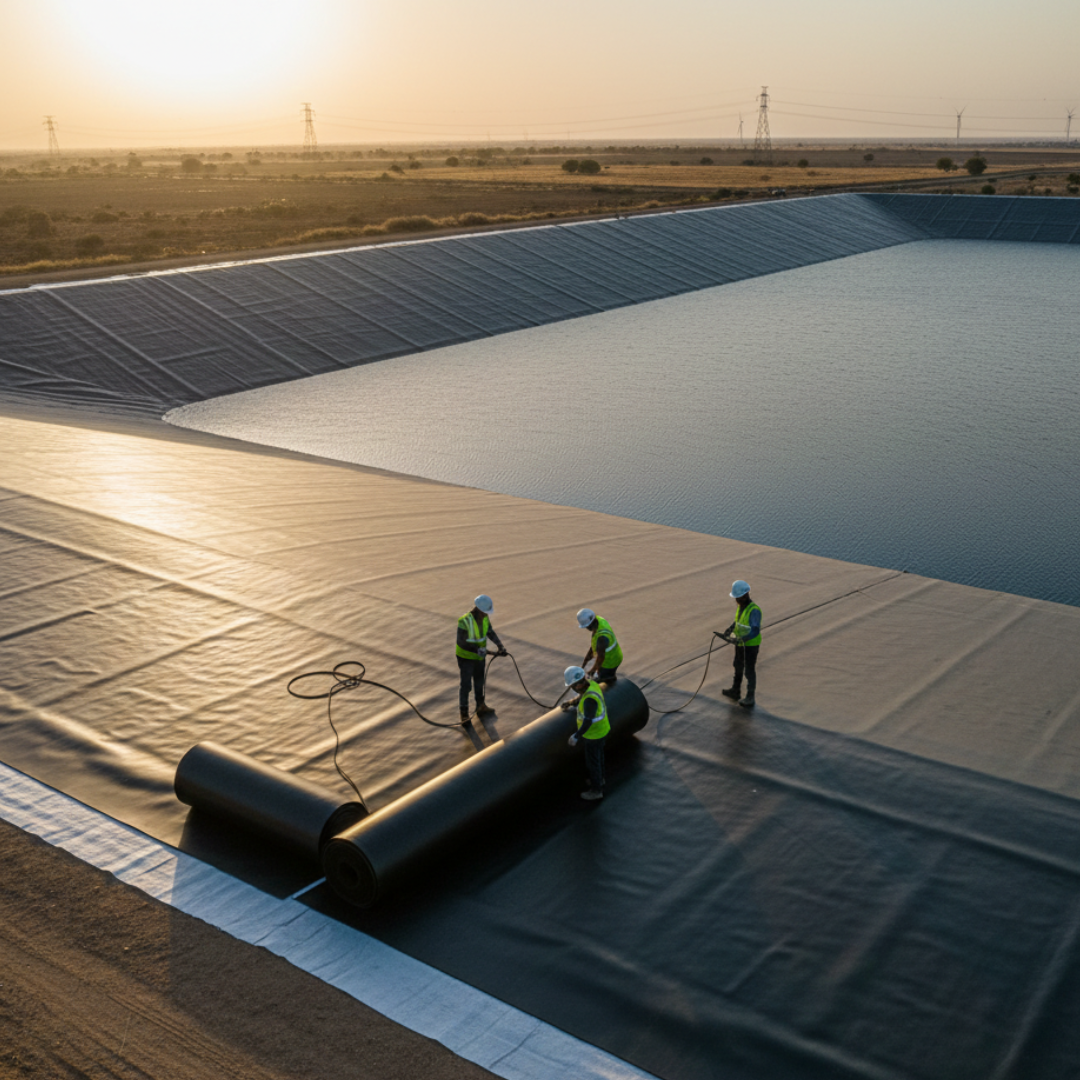
Geomembranes are indispensable in modern environmental and civil engineering. These low-permeability synthetic liners are the unsung heroes protecting our soil and water from contamination, forming the vital barrier in applications ranging from landfill lining to pond construction.
However, when planning a project, one of the most critical decisions is selecting the appropriate geomembrane thickness. The choice between 0.75mm, 1mm, and 2mm (or 30 mil, 40 mil, and 80 mil, respectively, for non-metric regions) directly impacts the liner’s performance, durability, cost, and overall suitability. Choosing the best geomembrane thickness requires balancing the project’s demands for puncture resistance, flexibility, and longevity.
Understanding Geomembrane Thickness Standards
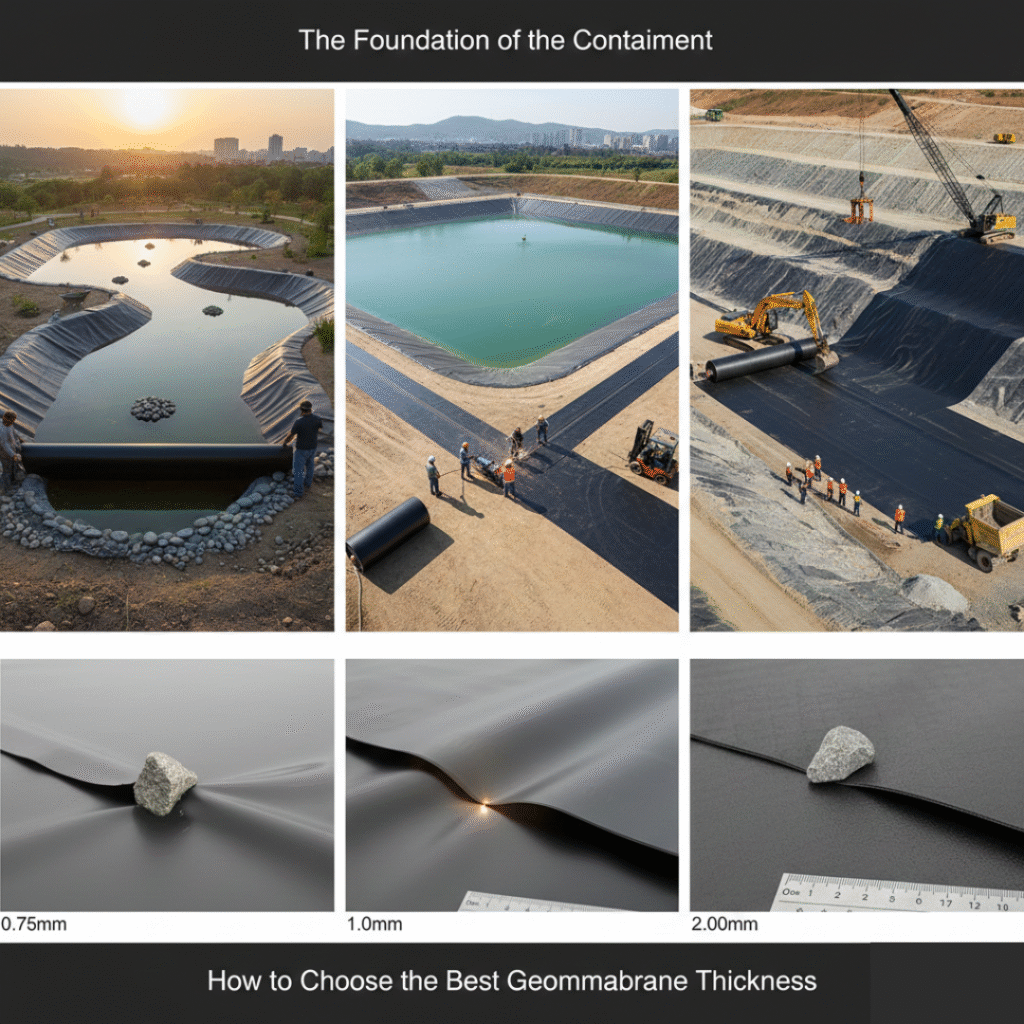
Before diving into the comparison, it’s essential to understand what these thicknesses signify. Geomembrane materials, often High-Density Polyethylene (HDPE geomembrane), Polyvinyl Chloride (PVC), or Linear Low-Density Polyethylene (LLDPE), are classified by their physical dimension.
| Thickness (mm) | Approximate Thickness (mil) | Common Applications | Key Characteristic |
| 0.75 mm | 30 mil | Temporary containment, decorative ponds, small canals | Flexibility |
| 1.0 mm | 40 mil | Wastewater lagoons, agricultural containment, medium-sized ponds | Balance of strength & cost |
| 2.0 mm | 80 mil | Landfill lining, hazardous waste storage, large-scale reservoirs | Maximum durability |
The required thickness is often dictated by regulatory bodies, especially for high-risk applications like mining heap leach pads or municipal landfill lining systems, where robust containment solutions are non-negotiable.
0.75mm Geomembrane: The Economical Choice (30 mil)
The 0.75mm geomembrane is the thinnest option commonly used in civil and environmental applications.
Key Strengths
Cost-Effectiveness: It offers the lowest geomembrane cost per square meter, making it ideal for budget-conscious projects.
Ease of Handling and Installation: Being lightweight, it requires less heavy machinery and fewer personnel for deployment, which can reduce overall liner installation time and expense.
Flexibility: Its thin profile makes it highly pliable, conforming well to irregular or complex subgrade contours, perfect for smaller, decorative water features.
Key Limitations
Lower Puncture Resistance: It is the most susceptible to damage from sharp subgrade objects, stones, or high-traffic areas during or after installation.
Reduced Longevity: While still durable, its lifespan in aggressive environments is generally shorter compared to thicker options, leading to higher long-term maintenance costs.
Not Suitable for Regulated Projects: It rarely meets the minimum regulatory requirements for critical containment systems like hazardous waste containment.
1.0mm Geomembrane: The Versatile Middle Ground (40 mil)
The 1.0mm thickness often hits the sweet spot for many medium-scale commercial and industrial applications, offering a crucial upgrade in performance over the 0.75mm option.
Key Strengths
Excellent Balance: It provides a significant increase in puncture resistance and overall strength compared to 0.75mm, without a massive jump in material cost.
Wider Application Range: This thickness is widely accepted for many commercial wastewater lagoons, storm retention ponds, and general secondary containment systems.
Improved Weld Strength: The increased material volume allows for stronger, more reliable field welding of seams, a critical factor for long-term leak prevention.
Considerations
Installation: It’s slightly heavier and less flexible than 0.75mm, requiring more careful handling during liner installation.
Still Not for the Heaviest Duty: While better than 0.75mm, it often falls short of the stringent requirements for primary landfill lining systems or highly abrasive applications.
2.0mm Geomembrane: Maximum Durability and Protection (80 mil)
The 2.0mm geomembrane is the thickest of these common options and is engineered for maximum performance and longevity in the most demanding environments.
Key Strengths
Superior Puncture Resistance: Its substantial thickness offers the best protection against physical damage, subgrade stress, and abrasion, making it ideal for mining heap leach pads and landfill lining.
Maximum Longevity: Designed for long-term infrastructure, this thickness ensures the longest possible service life, minimizing future repair and maintenance needs.
Meets Regulatory Standards: It is the standard minimum for most high-risk, regulated projects, including municipal solid waste (MSW) containment solutions and hazardous waste containment.
Key Limitations
Highest Cost: This option commands the highest geomembrane cost per unit area.
Installation Difficulty: It is significantly heavier, less flexible, and bulkier, which complicates field handling and requires specialized liner installation crews and equipment.
Weld Preparation: Field welding of 2.0mm material requires meticulous surface preparation and higher energy inputs to achieve a structurally sound seam for leak prevention.
How to Choose the Best Geomembrane Thickness

The decision ultimately boils down to a risk-versus-cost analysis informed by project-specific factors:
Level of Contaminant: If the material being contained is highly toxic or corrosive (hazardous waste containment), the risk of environmental disaster dictates choosing a thicker 2.0mm liner for maximum leak prevention and secondary containment.
Subgrade Preparation: A site with a poorly prepared subgrade (rocky, uneven) demands a thicker liner (1.0mm or 2.0mm) to ensure adequate puncture resistance. Excellent subgrade allows for potentially a thinner 0.75mm or 1.0mm solution.
Mechanical Stress & Load: Projects involving continuous traffic, heavy overlying material (like in mining heap leach pads), or significant differential settlement require the robust protection of a 2.0mm HDPE geomembrane.
Regulatory Requirements: Always check local and national regulations. High-risk projects like landfill lining or wastewater lagoons will likely have a minimum specified thickness (often 1.0mm or 1.5mm/60 mil, but 2.0mm for critical areas).
Project Lifespan: For temporary or short-term containment (under 5 years), 0.75mm might suffice. For long-term, permanent infrastructure (containment solutions intended to last decades), 2.0mm is the preferred best geomembrane thickness.
| Factor | 0.75 mm (30 mil) | 1.0 mm (40 mil) | 2.0 mm (80 mil) |
| Cost | Lowest | Medium | Highest |
| Puncture Resistance | Low | Medium/Good | Excellent |
| Flexibility | Highest | Medium | Lowest |
| High-Risk Projects | No | Possible (Secondary) | Yes (Primary) |
| Common Use | Decorative Ponds | Wastewater Lagoons | Landfill Lining |
Conclusion: Making the Final Selection
There is no single “best” geomembrane thickness across all applications. The optimal choice is the one that meets the project’s technical specifications for puncture resistance and longevity while remaining within budget.
Choose 0.75mm for non-critical, aesthetic, or temporary applications where geomembrane cost is the primary driver.
Choose 1.0mm for projects requiring a balance of durability and cost-efficiency, such as agricultural water storage and less aggressive wastewater lagoons.
Choose 2.0mm for high-stakes, long-term infrastructure, including landfill lining, mining heap leach pads, and hazardous waste containment, where regulatory compliance and leak prevention are paramount.
Consulting with an experienced liner installation specialist can provide invaluable insight to ensure you select the appropriate thickness for your unique containment solutions and maximize your return on investment.
FAQ’S
What is the main difference between 0.75mm, 1mm, and 2mm geomembrane sheets?
The main difference is strength, durability, and application suitability.
0.75mm is best for light-duty applications with low pressure.
1mm offers a balance of cost and performance for medium-duty uses.
2mm provides maximum strength and puncture resistance for heavy-duty and industrial projects.
Which geomembrane thickness is best for ponds and water reservoirs?
For small ponds, 0.75mm or 1mm is usually sufficient. For larger reservoirs or deeper water storage, 1.5mm to 2mm geomembrane is recommended to handle higher pressure and long-term exposure.
Is 2mm geomembrane always better than 1mm or 0.75mm?
Not always. While 2mm geomembrane is stronger and more durable, it is also more expensive. The best thickness depends on soil conditions, water depth, chemical exposure, and budget. Using thicker liners than necessary can increase costs without added benefit.
How do I choose the right geomembrane thickness for my project?
Choosing the right thickness depends on application type, load pressure, subgrade condition, UV exposure, and lifespan requirements. Professional assessment and proper installation help ensure the selected thickness performs effectively over time.