HDPE Liner Vs Geotextile

In the world of civil engineering and environmental protection, geosynthetic materials (1) play a pivotal role in enhancing the performance and longevity of various infrastructure projects. Among these, HDPE liners and geotextiles are two commonly encountered terms, but they serve vastly different functions. While both are synthetic fabrics or sheets, confusing their applications can lead to costly project failures. This blog post will clarify the key distinctions between HDPE liner vs. geotextile, explaining their unique properties, primary uses, and why they are often used together.
Note: Geosynthetics encompass a broad range of polymeric materials used in conjunction with soil, rock, or other geotechnical engineering materials.
What is an HDPE Liner?

An HDPE liner, short for High-Density Polyethylene liner, is a type of geomembrane (2). It is a highly impermeable, sheet-like material made from high-density polyethylene resin. Its primary characteristic is its ability to act as an effective barrier against liquids and gases.
Key Characteristics of HDPE Liners
Impermeability: This is the defining feature. HDPE liners have extremely low permeability, making them an excellent barrier to prevent fluid migration.
Chemical Resistance: HDPE is highly resistant to a wide range of chemicals, acids, bases, and solvents, which is crucial in waste containment and industrial applications.
Durability and Strength: It possesses high tensile strength, tear resistance, and puncture resistance, allowing it to withstand significant stress and provide long-term performance.
UV Resistance: With proper additives, HDPE liners offer good resistance to ultraviolet degradation, making them suitable for exposed applications.
Rigidity: Compared to other geomembranes like PVC or LLDPE, HDPE is relatively rigid, which can sometimes make installation on highly irregular subgrades more challenging but contributes to its robust barrier properties.
Note: Geomembranes are specifically designed as impermeable barriers, distinguishing them from other geosynthetics that allow fluid flow.
What is a Geotextile?

A geotextile is a permeable fabric, either woven or non-woven, made from synthetic fibers, typically polypropylene or polyester. Unlike HDPE liners, which block fluid flow, geotextiles are designed to allow water to pass through while retaining soil particles.
Key Characteristics of Geotextiles
Permeability: Geotextiles are permeable, meaning they allow liquids and gases to pass through. The pore size can be engineered to control the rate and type of filtration.
Filtration: They prevent the migration of fine soil particles while allowing water to drain, thus preventing clogging of drainage systems.
Separation: They can separate distinct layers of soil or aggregate, preventing intermixing and maintaining the integrity of each layer.
Reinforcement: They can distribute loads over a wider area, increasing the tensile strength of the soil and providing stability in roads, embankments, and retaining walls.
Drainage: They can collect and convey water or other liquids within their plane (transmissivity), acting as a drainage layer.
Protection: They can cushion and protect other geosynthetics (like geomembranes) from puncture damage.
HDPE Liner vs. Geotextile: Key Differences
To clearly illustrate the distinction, let’s compare them directly:
| Feature | HDPE Liner | Geotextile |
| Material Type | Impermeable sheet (Geomembrane) | Permeable fabric (Woven or Non-woven) |
| Primary Function | Barrier, Containment | Filtration, Separation, Reinforcement, Drainage, Protection |
| Permeability | Extremely Low (Impermeable) | High (Permeable) |
| Fluid Flow | Blocks fluid flow | Allows fluid flow (filters solids) |
| Thickness | Typically thicker (0.5 mm to 3.0 mm+) | Generally thinner (varies widely) |
| Key Properties | Chemical resistance, tensile strength, puncture resistance | Pore size, permittivity, tensile strength, grab strength, CBR puncture |
| Application Examples | Landfill liners, pond liners, reservoir liners, secondary containment | Road stabilization, drainage trenches, erosion control, subgrade separation |
How They Work Together: A Synergistic Relationship?

Despite their differing functions, HDPE liners and geotextiles are frequently used in conjunction within the same project to leverage their complementary strengths. This synergistic approach enhances the overall performance and longevity of the engineered system.
1. Protection of Geomembranes
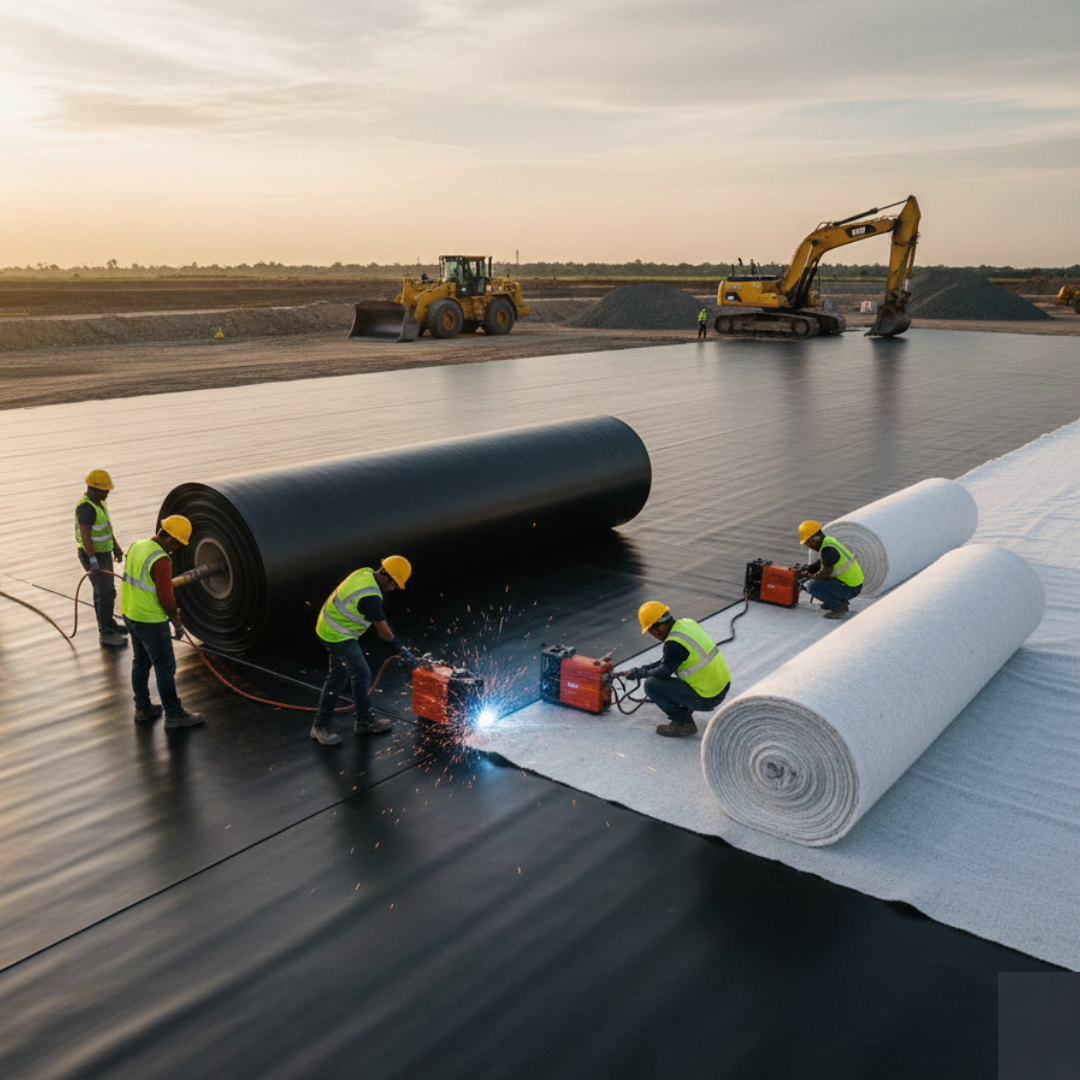
One of the most common applications is using a geotextile fabric as a protective layer for the HDPE liner. Placed directly above and/or below the geomembrane, the geotextile shields it from puncture damage caused by sharp stones, debris, or stresses from overlying materials or construction equipment. This geomembrane protection is vital for maintaining the liner’s integrity and containment function.
2. Drainage Behind Liners
In systems requiring fluid management, a geotextile can be placed behind or beneath an HDPE liner to facilitate drainage. For example, in a landfill base liner, a drainage geotextile (often as part of a geocomposite drain) is placed above the primary geomembrane to collect and channel leachate to collection pipes, preventing hydrostatic pressure buildup on the liner.
3. Filtration in Containment Systems
Even in a containment system where an HDPE liner is the primary barrier, geotextiles may be used for filtration in associated drainage layers. They prevent fine soil particles from clogging the gravel or pipe systems that collect and transport liquids from the geomembrane surface.
4. Subgrade Preparation
Before installing an HDPE liner, a geotextile can be used to stabilize the subgrade, separating it from the liner and providing an improved bedding surface, especially over soft or uneven soils. This ensures a smoother surface for liner installation and reduces stress points.
Common Applications Where Both are Used
Landfill Systems: A classic example. HDPE liners form the impermeable base and cap, while geotextiles provide protection, filtration, and drainage layers. This is crucial for effective environmental protection.
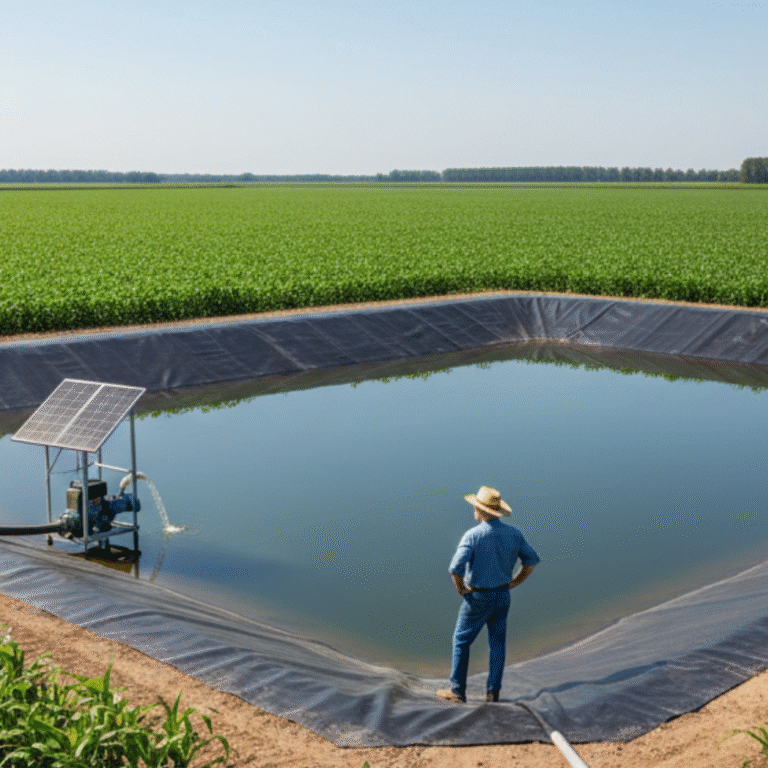
Pond Liners and Reservoirs: HDPE liners provide the watertight barrier, and geotextiles protect the liner from subgrade punctures.
Mining Heap Leach Pads: HDPE liners contain the process solutions, and geotextiles offer protection and facilitate drainage.
Secondary Containment: For fuel tanks or chemical storage, HDPE liners prevent spills, and geotextiles provide a protective cushion.
Conclusion
The distinction between an HDPE liner and a geotextile is fundamental to successful geotechnical and environmental projects. While one is an impermeable barrier designed for containment, the other is a permeable fabric used for filtration, separation, reinforcement, drainage, and protection. Recognizing their unique roles and understanding how they can be effectively combined is key to designing resilient, cost-effective, and environmentally sound infrastructure. Always consult with a geosynthetics engineer to ensure the proper selection and application of these vital materials for your specific project needs.
FAQ’S
What is the main difference between an HDPE liner and geotextile?
An HDPE liner is an impermeable geomembrane used for waterproofing and containment, while geotextile is a permeable fabric used for filtration, separation, reinforcement, and drainage. HDPE blocks water; geotextile allows water to pass through.
Which material is better for ponds, tanks, and wastewater containment?
For water containment, HDPE liner is the better choice because it is waterproof, chemical-resistant, and durable. Geotextile cannot hold water as it is permeable, so it is used under the HDPE liner as a protective or separation layer.
When should geotextile be used instead of HDPE liner?
Geotextile is preferred for soil stabilization, road construction, drainage layers, erosion control, and separation between soil and aggregate. It is not used for water containment but improves strength, filtration, and support in civil engineering projects.
Can HDPE liner and geotextile be used together?
Yes. They are commonly used together in ponds, landfills, reservoirs, and wastewater systems. Geotextile acts as a protective cushion layer, preventing sharp objects from puncturing the HDPE liner and improving overall system durability.