
How Geomembrane Prevents Leakage in Water Reservoirs
Introduction
Water reservoirs are essential infrastructure worldwide, vital for agriculture, municipal water supply, hydroelectric power, and industrial processes. However, a significant challenge in managing these reservoirs is preventing water loss, which can occur through evaporation or, more commonly, seepage and leakage into the underlying soil. This leakage not only depletes precious water resources but can also compromise the structural integrity of the dam or embankment and potentially contaminate groundwater.
This is where advanced geosynthetic engineering comes into play. The answer to this critical challenge is the installation of a high-performance geomembrane liner.
What is a Geomembrane?
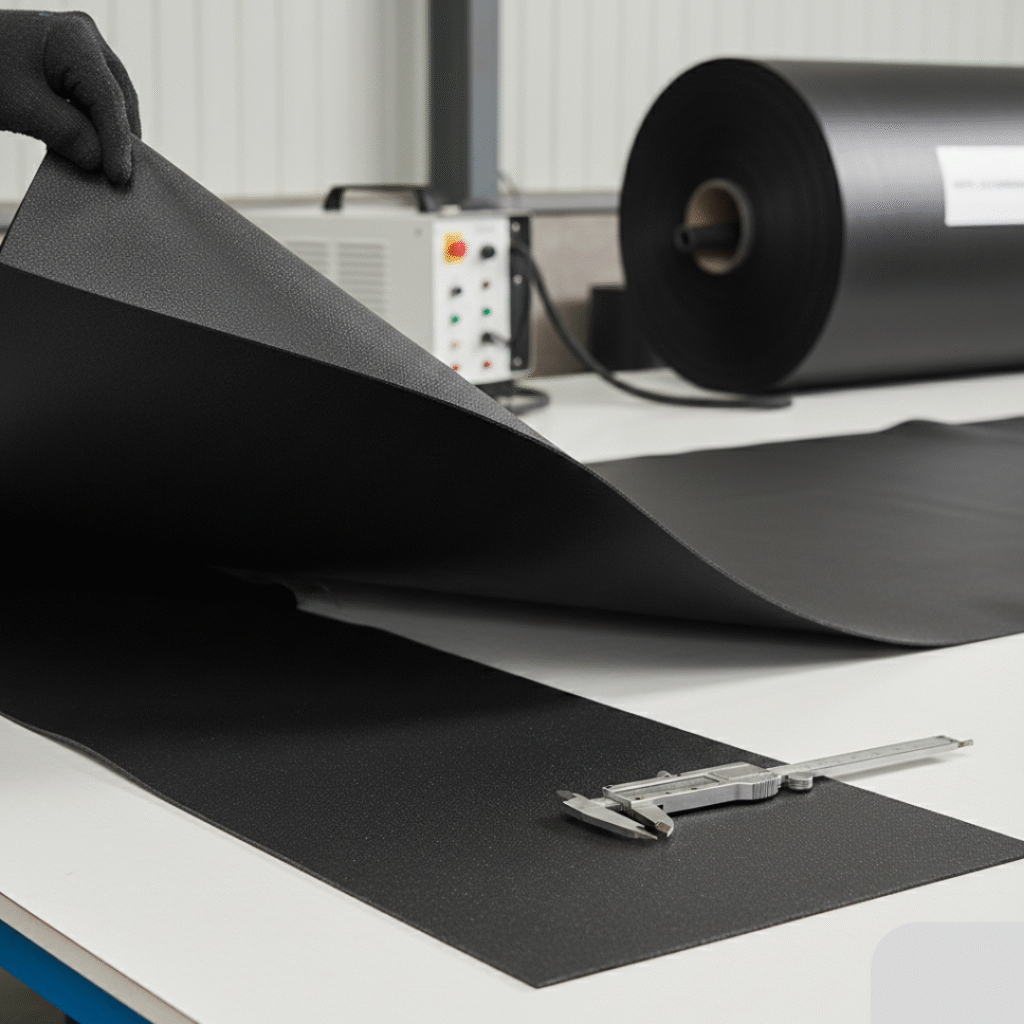
A geomembrane is essentially a very low-permeability synthetic membrane liner used in geotechnical and environmental engineering applications. They are typically made from polymer materials like polyethylene (most commonly HDPE and LLDPE), PVC, or EPDM. Their primary function is to act as a complete fluid barrier (or vapor barrier), ensuring that no liquid can pass through.
The material’s strength, chemical resistance, UV stability, and flexibility are crucial for effective, long-term performance.
The Mechanics of Leak Prevention: How Geomembranes Work?
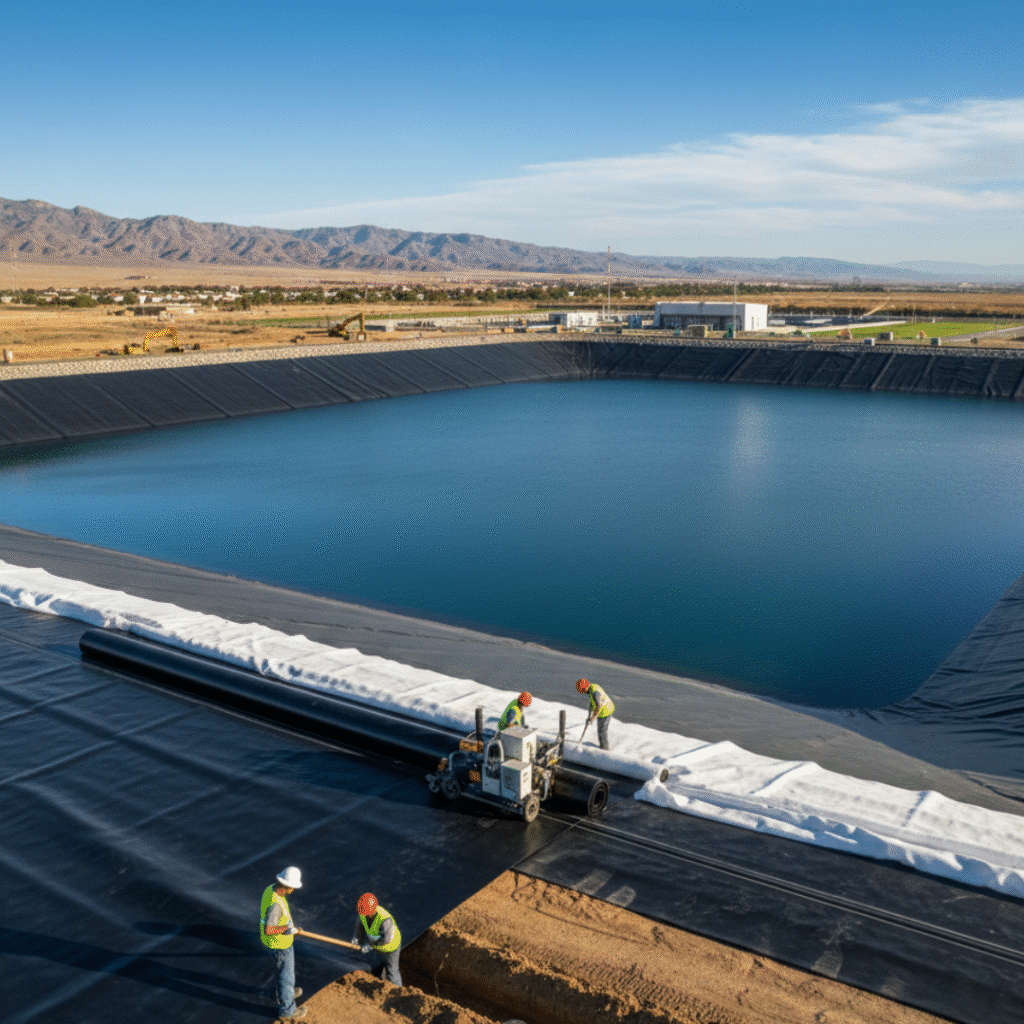
A geomembrane prevents water leakage through a straightforward yet highly effective mechanism: creating an impervious layer that isolates the stored water from the porous earthen structure.
1. Creating an Impervious Barrier
The core function is the extremely low hydraulic conductivity of the polymer material itself. Unlike soil, which inherently has voids and channels that allow water to flow through (even compacted clay can allow some seepage), a geomembrane is a solid, continuous plastic sheet.
2. Seam Integrity: The Critical Success Factor
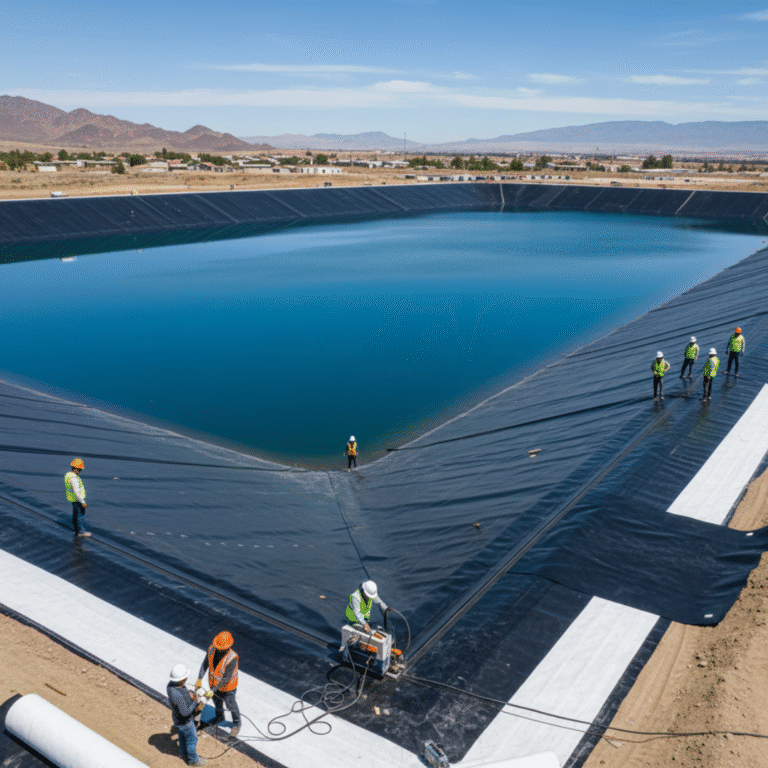
A reservoir liner is almost never one single piece of material; it’s made up of large panels. The single most important element in the geomembrane’s performance is the geomembrane welding process used to join these panels.
Fusion Welding: This technique uses heat and pressure to melt the edges of the polymer sheets together, creating a homogeneous, monolithic bond stronger than the surrounding material.
Extrusion Welding: Used primarily for patches and detail work, this involves melting a bead of the same polymer material into the overlap between two sheets.
Properly executed geomembrane installation with rigorous non-destructive testing (such as air pressure or vacuum box testing) of every seam guarantees. That the entire liner system is a single, uninterrupted water containment barrier.
The Full Containment System

A geomembrane doesn’t work alone. It’s part of a complete containment system designed to protect the liner and ensure long-term functionality.
Subgrade Preparation: The soil beneath the geomembrane must be meticulously prepared, cleared of rocks, sharp objects, and roots. A smooth, compacted subgrade is essential to prevent punctures.
Geotextile Protection Layer: Often, a geotextile layer (a heavy-duty fabric) is placed directly beneath and sometimes above the geomembrane. Its function is crucial:
Under the liner: It acts as a cushion to protect the geomembrane from sharp objects in the subgrade.
Over the liner: It is used if a protective soil layer or concrete armor is placed on top, preventing abrasion of the geomembrane.
Anchor Trench: The edges of the geomembrane are typically secured in an anchor trench dug around the perimeter. This buries the edge, preventing uplift from wind or water forces, and completes the sealed, impervious layer.
Long-Term Reliability and Cost-Effectiveness
While the initial cost of geomembrane installation is a consideration, the long-term benefits of guaranteed seepage control make it an extremely cost-effective solution.
By virtually eliminating water loss through the reservoir bed and sides, a geomembrane maximizes the usable capacity of the reservoir. Furthermore, its inherent resistance to biological and chemical degradation ensures decades of reliable water containment with minimal maintenance, securing the investment in essential water resources for the community. The lifespan of a high-quality HDPE geomembrane often exceeds 50 years.
Conclusion
Geomembranes have revolutionized the field of water containment, providing a scientifically proven and highly reliable method for leak prevention in water reservoirs. However, through the proper selection of a durable synthetic membrane liner, meticulous geomembrane welding, and robust system design. Engineers can create an impervious shield that safeguards our most valuable resource. They are the benchmark for modern, efficient, and sustainable seepage control in water infrastructure.
FAQ’S
Why are geomembrane liners used in water reservoirs?
Geomembrane liners are used to prevent water seepage and leakage, reduce water loss, and protect surrounding soil from erosion. They create a durable, impermeable barrier that improves the efficiency and lifespan of water reservoirs.
Which geomembrane material is best for water reservoirs?
HDPE geomembrane is commonly preferred for large water reservoirs due to its high strength, UV resistance, and long service life. PVC and LDPE geomembranes are also used where flexibility and ease of installation are required.
What thickness of geomembrane liner is recommended for reservoirs?
The recommended thickness usually ranges from 1.0mm to 2.0mm, depending on reservoir size, water depth, subgrade conditions, and exposure to sunlight. Larger or deeper reservoirs often require thicker liners.
Are geomembrane liners safe for potable water reservoirs?
Yes. High-quality geomembrane liners designed for water storage are non-toxic and safe for potable water, provided they comply with relevant quality and safety standards and are installed correctly.